
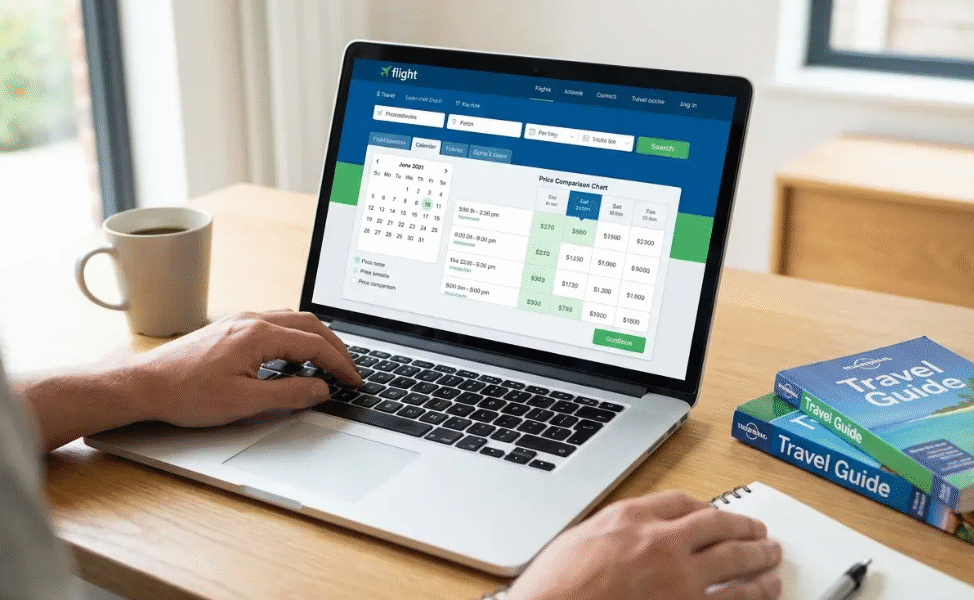
Securing a reasonably priced airline ticket often feels like playing a high-stakes game against an advanced supercomputer designed to maximize corporate profit. Modern carriers use sophisticated yield management software to adjust fares constantly based on real-time demand, seasonal trends, and competitor availability. Understanding the underlying mechanics of air flight booking systems gives you a distinct advantage over the average consumer who simply accepts the first price they see. By peeling back the layers of how airlines distribute their inventory, travelers can navigate the digital marketplace with greater precision and financial efficiency. The evolution of the travel industry has transformed the simple act of purchasing a ticket into a complex exercise in data analysis and strategic timing.
Airlines employ highly sophisticated software systems to maximize the revenue generated from every single seat on a commercial plane. These dynamic pricing models evaluate historical booking data and real-time purchasing trends to determine the optimal fare structure for every route. A middle seat sold for fifty dollars today might suddenly cost three hundred dollars tomorrow based entirely on shifting inventory levels and anticipated demand. This volatility is not random; it is a calculated effort to ensure that every flight reaches its maximum potential revenue before takeoff. Furthermore, these algorithms consider external factors such as major sporting events, political summits, and even local weather patterns that might influence travel behavior.
The global distribution systems (GDS) serve as the backbone for these transactions, connecting airlines with travel agents and online search engines. Platforms like Sabre, Amadeus, and Travelport process millions of data points every second to ensure that seat availability is synchronized across all sales channels. When you initiate an air flight booking, you are essentially interacting with a massive database that balances the airline’s need for high load factors against the passenger’s desire for affordability. This infrastructure was originally developed in the mid-20th century but has evolved into a lightning-fast digital network that handles billions of queries annually. Without this centralized system, the modern aviation market would likely collapse under the weight of its own logistical complexity.
According to the International Air Transport Association (IATA), the integration of these systems allows for a more seamless global travel experience across different jurisdictions. However, the complexity of these systems also means that small glitches can lead to “error fares,” which savvy travelers occasionally exploit for massive savings. These pricing anomalies occur when the software fails to calculate a fuel surcharge or currency conversion correctly, resulting in a ticket price that is significantly below market value. While airlines sometimes honor these mistakes, they are increasingly using automated detection tools to cancel such bookings before the passenger can even reach the airport terminal.
How Yield Management Alters Fares
Yield management represents the cornerstone of modern airline profitability and global ticket distribution strategies used by legacy and low-cost carriers alike. Carriers divide the standard economy cabin into multiple alphabetical fare buckets, each carrying a different price tag and a specific set of purchasing rules. As the cheaper buckets inevitably sell out, the central reservation system automatically bumps the remaining inventory into higher, more expensive pricing tiers. This ensures that the airline captures the highest possible price from travelers who are less price-sensitive or booking at the last minute. This tiered system is why you might see “only 2 seats left at this price” warnings on many air flight booking platforms.
This systematic approach explains why passengers sitting in identical economy seats frequently pay vastly different amounts for their journey. The Bureau of Transportation Statistics routinely tracks these fluctuations, showing significant fare variations even on identical domestic routes. Travelers who understand this inventory structure can better predict when ticket costs will likely increase or decrease based on the time of year. Furthermore, airlines often release “sale” buckets during off-peak hours to stimulate demand for flights that are underperforming according to historical benchmarks. By monitoring these buckets, a diligent traveler can identify the exact moment when a carrier is attempting to fill a half-empty aircraft.

The Impact of Search History
Many consumers believe that airlines track their browser cookies to artificially inflate prices after multiple searches for the same route. While dynamic pricing does fluctuate rapidly, cybersecurity experts and industry analysts largely debunk the individual cookie-tracking myth in modern air flight booking. Fare increases during a search session usually occur because another traveler or travel agency simultaneously purchased the last ticket in a cheap fare bucket. Because these systems are global, a seat can be snatched up by someone on the other side of the world in an instant. The perception of being “tracked” is often a result of the high-velocity nature of the global seat inventory.
However, using a VPN or an incognito window can still be beneficial for avoiding localized pricing discrepancies based on your geographic location. Some airlines may offer different base fares to consumers in different countries to account for varying purchasing power and local market competition. While the “cookie myth” may be exaggerated, the reality of regional pricing is a very real factor in the global aviation industry. Smart travelers often compare prices across different regional versions of booking sites to ensure they are receiving the most competitive offer available. This practice, known as “point-of-sale” optimization, can sometimes yield substantial savings on long-haul international routes where currency fluctuations are more pronounced.
- Airlines use dynamic yield management systems that constantly adjust seat prices based on real-time supply and demand.
- Economy cabins contain multiple hidden fare buckets that automatically trigger price increases as the cheapest seats sell out.
- Sudden price jumps during a search session typically result from inventory changes rather than targeted browser cookie tracking.
Proven Strategies for Scoring the Best Air Flight Booking Deals
Finding cheap airfare requires a combination of flexibility, timing, and an understanding of global airline networks and their operational hubs. Consumers who rigidly lock themselves into specific dates and airports generally pay a substantial premium for that convenience in the market. Expanding your search parameters remains the most effective method for reducing your overall travel expenditure and finding hidden value in the system. By considering alternative airports or mid-week departures, you can often find significant savings that are unavailable to the average weekend traveler. For example, flying into a secondary airport like London Gatwick instead of Heathrow can sometimes reduce the ticket price by twenty percent or more.
Another critical strategy involves the “24-hour rule,” which is a regulation in many jurisdictions, including the United States, that allows passengers to cancel a booking within 24 hours for a full refund. This allows you to lock in a low price while you finalize your travel plans or continue searching for an even better deal. If a lower price appears shortly after your initial air flight booking, you can simply cancel the first one and rebook at the lower rate. This tactic provides a safety net for those who are worried about missing out on a sudden price drop. It is important to note that this rule typically applies only if the flight is booked at least seven days before the scheduled departure date.
Timing Your Purchase Correctly
Industry data consistently reveals specific windows where air flight booking offers the highest probability of securing lower fares for various routes. A comprehensive study by CheapAir analyzed millions of itineraries to determine the optimal purchasing timeline for domestic travel. They found that buying tickets approximately 40 to 70 days before departure generally yields the most favorable pricing outcomes for the majority of travelers. For international journeys, this window often extends to three to six months before the scheduled departure date. This “Goldilocks Window” is when airlines have moved past their initial high-pricing phase but haven’t yet reached the last-minute desperation phase.
Last-minute deals have largely disappeared from the modern travel industry because business travelers readily pay premium prices for late bookings. Conversely, booking a flight eleven months in advance often results in higher costs because airlines have not yet adjusted their baseline algorithms for that period. Finding the middle ground requires patience and regular price monitoring using automated tracking tools that can alert you to sudden changes. Consistency in monitoring is key, as prices can change multiple times within a single twenty-four-hour period. Many experts suggest that checking prices on Tuesday afternoons is no longer the magic bullet it once was, as algorithms now update in real-time regardless of the day of the week.
Set up automated price alerts on platforms like Google Flights or Skyscanner at least three months before your trip. These tools will notify you immediately when airlines release sudden fare drops, allowing you to complete your air flight booking at the absolute lowest price point.
Leveraging Flexible Routing and Hubs
Direct flights offer supreme convenience, but they almost always command a higher price than itineraries with connections in major cities. Major carriers operate on a hub-and-spoke model, meaning they route passengers through central airports to maximize flight capacity and operational efficiency. You can frequently save hundreds of dollars by accepting a short layover at an airline’s primary operational hub rather than insisting on a non-stop journey. These layovers also provide an opportunity to explore a new city if the connection time is long enough. Some airlines, like Icelandair or Qatar Airways, even offer free stopover programs that allow you to stay in their hub city for several days at no extra airfare cost.
Savvy travelers sometimes employ hidden city ticketing, though airlines strongly discourage this practice in their carriage contracts and may penalize users. This strategy involves booking a flight with a layover in your actual destination and simply skipping the final leg of the journey entirely. While effective for saving money, repeated use of this tactic can result in the termination of your frequent flyer account or the cancellation of your return flight. It is a high-risk strategy that should only be used by those who fully understand the potential consequences and travel with only carry-on luggage. Most online travel agencies have implemented warnings to prevent users from accidentally booking these types of itineraries without knowing the risks.
Advanced Air Flight Booking: How to Book Complex Multi-City Itineraries

Arranging multi-city trips or international round-the-world tickets requires a highly methodical approach to avoid exorbitant pricing structures and routing errors. Standard booking engines often struggle to process complicated routing requests efficiently, which frequently results in artificially inflated aggregate fares for the user. Following a systematic procedure helps travelers construct complex itineraries without breaking their established travel budgets or wasting hours of research time. The key is to break the journey down into manageable segments before attempting to bundle them into a single ticket. This modular approach allows you to identify which specific leg of the journey is driving up the total cost.
One advanced technique is the “open-jaw” ticket, where you fly into one city and depart from another. This is particularly useful for travelers planning a road trip or a train journey across a continent, as it eliminates the need to return to the original arrival city. When performing an air flight booking for an open-jaw route, it is often cheaper to book it as a single multi-city itinerary rather than two separate one-way tickets. This is because airlines view the multi-city booking as a round-trip equivalent, which often triggers lower fare classes that are unavailable for one-way travel. Mastering this technique can save both time and money while providing much greater geographical flexibility for your vacation.
How to Construct a Multi-City Journey
Map Your Core Destinations
Outline your primary stops and determine the geographical flow of your trip to avoid unnecessary flight segments and long travel times.
Search Individual Segments First
Look up one-way fares for each leg of the journey to establish a realistic baseline price for your trip before searching for bundles.
Construct the Multi-City Ticket
Use an advanced air flight booking platform to input your desired route as a single multi-city search query to see if the airline offers a discount.
Compare and Finalize
Compare the aggregated multi-city ticket price against the sum of the individual one-way segments before providing your payment details to ensure the best deal.
Navigating Air Flight Booking: Hidden Fees and Fare Classes Explained
The unbundling of airline services has drastically changed how consumers evaluate the true cost of their transportation in the modern era. Base fares now frequently exclude amenities that were historically considered standard inclusions for all commercial passengers, such as checked bags or seat assignments. You must carefully calculate the total cost of your journey by factoring in all required ancillary fees before clicking the final purchase button. What looks like a bargain at first glance can quickly become more expensive than a full-service carrier once these extras are added. This “drip pricing” strategy is designed to lure customers with a low headline price while making the final transaction much more profitable for the carrier.
Airlines have become masters of “upselling” during the checkout process, often using psychological triggers to encourage passengers to spend more. From priority boarding to extra legroom, every step of the air flight booking journey is designed to extract additional revenue from the traveler. It is essential to remain disciplined and only select the services that you truly need for your comfort and convenience. Understanding the specific rules of your fare class is the best way to avoid unexpected charges at the airport, where fees are often significantly higher than they are online. For instance, some ultra-low-cost carriers charge up to $100 for a carry-on bag if it is not paid for in advance during the initial reservation process.
Basic Economy vs. Standard Economy
Most major airlines introduced basic economy fares to compete directly with ultra-low-cost carriers on popular domestic and international routes. These restrictive tickets typically prohibit seat selection, restrict flight changes, and sometimes ban passengers from bringing a full-sized carry-on bag into the cabin. Upgrading to a standard economy ticket often provides better value once you calculate the cost of adding baggage a la carte or the value of flexibility. For many travelers, the peace of mind that comes with a standard ticket outweighs the small initial savings of a basic economy fare. This is especially true for families who wish to ensure they are seated together without paying individual seat selection fees.
Reading the fine print during the checkout process prevents unpleasant financial surprises at the airport check-in counter on the day of travel. The Department of Transportation recently pushed for greater fee transparency, but airlines still present upgrades aggressively during the booking flow. Always verify what specific baggage allowances and boarding privileges correspond to your selected fare class before finalizing your air flight booking. A few minutes of careful reading can save you fifty dollars or more in unexpected baggage fees later on. Additionally, check if your credit card offers baggage fee waivers, as this can effectively turn a basic economy ticket into a standard economy experience for a lower price.

The Future of Air Flight Booking and Digital Travel Reservations
The technology powering flight reservations continues to advance rapidly as carriers seek new ways to optimize their revenue streams and improve the customer experience. Legacy booking systems built in the 1970s are slowly being replaced by modern, cloud-based retail platforms that offer greater flexibility and speed. These upgrades allow airlines to offer personalized travel packages based on your past purchasing behavior, loyalty status, and specific travel preferences. In the near future, the booking process will feel less like a transaction and more like a curated shopping experience tailored to your needs. This shift toward “continuous pricing” will allow airlines to adjust fares by cents rather than dollars, creating an even more fluid marketplace.
Blockchain technology is also being explored as a way to streamline the settlement process between airlines and travel agencies, potentially reducing transaction fees. This could lead to more transparent pricing and faster updates to seat inventory across all platforms. As these technologies mature, the friction currently associated with air flight booking—such as delayed synchronization and complex refund processes—will likely diminish. Travelers can look forward to a more seamless integration between their flight, hotel, and ground transportation reservations in a single, unified digital ecosystem. Imagine a world where your flight delay automatically notifies your hotel and adjusts your car rental pickup time without any manual intervention.
Artificial Intelligence in Booking Systems
Artificial intelligence now plays a significant role in how airlines forecast demand and manage their seat inventory across global networks. Machine learning algorithms analyze vast datasets, including weather patterns, local events, and even social media trends, to adjust pricing dynamically across thousands of routes. This technological shift means air flight booking will become increasingly personalized, though potentially less predictable for bargain hunters who rely on old-school tricks. AI can predict when a flight is likely to sell out and adjust prices upward in anticipation of a surge in demand. Conversely, it can also identify periods of low demand and trigger flash sales to specific customer segments who are likely to travel on short notice.
The industry is also transitioning to New Distribution Capability (NDC) standards to modernize ticket sales across all digital and physical channels. This framework allows airlines to distribute rich content, such as photos of seats and customized meal bundles, directly to travel agents and corporate booking tools. As corporate travel management platforms adopt these standards, business travelers will experience a much smoother and more informative reservation process. This shift toward “retail-style” selling is the biggest change to the aviation industry’s distribution model in several decades. It empowers airlines to sell “experiences” rather than just seats, allowing for a higher degree of customization for every passenger.
Travel agencies and online aggregators must continuously adapt their own platforms to interface with these upgraded airline networks and data streams. Consumers will soon see more direct offers and subscription-based flight models replacing traditional one-off purchases for frequent travelers. Staying informed about these technological shifts helps you anticipate how airline ticket purchasing will function in the coming years and how to find the best value. The future of travel is data-driven, and those who understand the data will always find the best way to fly for less. As biometric boarding and digital identity wallets become standard, the entire journey from air flight booking to arrival will become a touchless, high-efficiency process.
- Unbundled fare structures mean the base ticket price rarely reflects the final cost of a flight.
- Basic economy tickets often end up costing more than standard fares if you require baggage or seat assignments.
- Artificial intelligence and new distribution standards are shifting the industry toward personalized, dynamic pricing models.
Conclusion: Mastering Your Next Air Flight Booking
Successfully executing an air flight booking requires strategic planning, patience, and a solid understanding of modern airline pricing mechanisms. By timing your purchases correctly and maintaining flexibility with your routing and departure dates, you can consistently bypass the most expensive fare brackets. Remember to factor in all ancillary fees, such as baggage and seat selection, before committing to a seemingly cheap basic economy ticket. The true cost of travel is often hidden beneath the surface of the initial search results, requiring a diligent eye to uncover. As the industry continues to evolve, staying adaptable and informed will be your greatest asset in securing affordable airfare.
The aviation industry will continue refining its algorithms to maximize revenue across every commercial route and passenger segment. However, educated consumers who utilize price tracking tools and understand yield management principles will always maintain a competitive edge in the marketplace. Approach your next travel reservation analytically, stay informed about industry trends, and you will secure the best possible value for your journey. Whether you are flying for business or pleasure, the power to find a great deal is firmly in your hands if you know where to look. Ultimately, the goal is to spend less on the flight so you can spend more on the experiences that await you at your destination.