
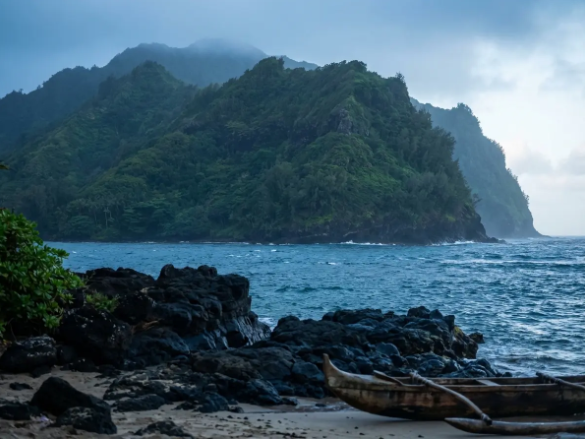
Imagine a remote location where time seemingly stopped over a century ago, leaving the landscape largely untouched by modern progress. Just seventeen miles off the bustling coast of Kauai sits Niihau, a fascinating private island hawaii location completely shrouded in mystery. This seventy-two square mile landmass represents the last completely privately owned stretch of land in the entire archipelago.
Outsiders rarely step foot on its pristine beaches without receiving a highly coveted personal invitation from the owners. This extreme isolation successfully preserves a traditional Hawaiian lifestyle that has completely vanished from the rest of the Hawaiian islands. We will examine the fascinating history, the distinct culture, and the modern realities of this highly restricted Pacific location.
In 1864, a Scottish widow named Elizabeth McHutchison Sinclair made a monumental real estate purchase that changed history forever. She bought the entire property from King Kamehameha IV for exactly ten thousand dollars in gold. The massive transaction required her family to protect the native Hawaiians and maintain their specific way of life.
The Sinclair family originally traveled from New Zealand searching for suitable ranching property across the Pacific Ocean. While King Kamehameha initially offered them tracts near Honolulu, they ultimately selected Niihau for its open pastures. This original promise to the monarchy remains the foundational guiding principle for the island’s management today.
Eventually, the massive agricultural estate passed down to her direct descendants, the Robinson family. Brothers Bruce and Keith Robinson currently manage the property and fiercely guard its borders against outside interference. A devastating polio epidemic in the 1950s originally prompted the owners to restrict access completely to protect the vulnerable population.
This strict quarantine policy birthed the famous moniker “forbidden island”—often referred to as the âforbidden islandâ—that still persists in popular culture today. The bold decision prevented a major health crisis and established the strict visitation rules that remain active. The management approach effectively froze the community in time, blocking the massive resort development seen elsewhere.
- Elizabeth McHutchison purchased the property from King Kamehameha IV in 1864 for ten thousand dollars in gold.
- The Robinson family maintains strictly guarded borders to honor the original promise made to the Hawaiian monarchy.
- A devastating 1950s polio outbreak originally triggered the strict quarantine that earned the location its famous nickname.
Daily Life for Niihau Residents

The few dozen full-time residents maintain a lifestyle vastly different from the neighboring Big Island or Oahu. You will not find any paved roads, large grocery stores, or dedicated police stations anywhere on the property. Modern conveniences like indoor plumbing remain largely absent from the small, tight-knit settlement of Puuwai.
Instead, the remote community relies entirely on off-grid solutions like solar panels for electricity and catchment systems for drinking water. The Hawaiian language serves as the primary language in daily conversation, making it the only place where this linguistic tradition thrives naturally. The rich Hawaiian culture dictates the daily rhythm, focusing heavily on hunting, fishing, and mutual community support.
The way these residents live offers a rare, unfiltered glimpse into historical Pacific settlements before commercial globalization took hold. Families hunt wild eland and sheep that roam freely across the dry, scrubby terrain to provide meat for their tables. The way people on Niihau live requires immense physical resilience and a deep connection to the surrounding natural resources.
Niihau is the only place on Earth where the native tongue is spoken as the dominant language in every home. Children learn English as a secondary subject when they attend the small village school.
Wildlife Conservation on the Forbidden Island
The complete lack of major human development creates a massive sanctuary for numerous vulnerable and threatened species. The isolated coastlines provide a crucial critical habitat for the endangered Hawaiian monk seal. These large