
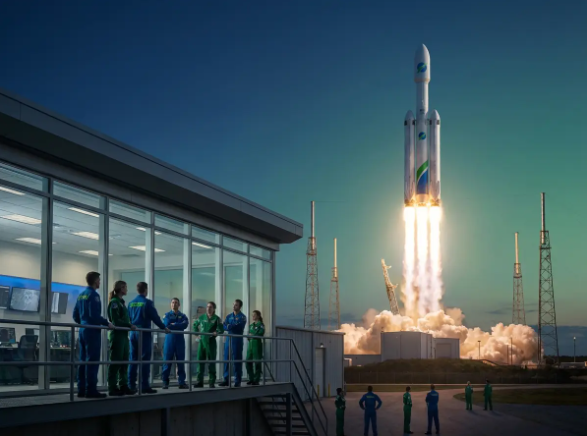
Space flight has consistently captured human imagination since the very first rockets broke through our upper atmosphere. Today, we stand on the edge of a massive shift in how we approach the future of space travel and daily orbital operations. A powerful combination of massive government funding and aggressive private investment currently drives this rapid aerospace expansion.
Recent advancements in modern propulsion technology have completely transformed how we calculate heavy payload delivery costs for orbital missions. Aerospace engineers continue testing advanced composite materials that make rockets significantly lighter and much more durable for long-term use. These critical structural improvements allow us to launch heavier scientific equipment further into the solar system than ever before.
You can expect to see dramatic changes in our orbital infrastructure over the next ten years of development. Professional astronauts and civilian passengers will soon share vehicles bound for destinations far beyond our home planet and moon. Are you ready to witness the next great era of human expansion across the broader solar system in our lifetime?
A new era of commercial space activity has fundamentally changed how we access the upper atmosphere for research. Government agencies no longer hold a strict monopoly on building and launching heavy transport rockets for routine orbital missions. Innovative private companies now handle the vast majority of routine cargo deliveries to existing orbital platforms located in orbit.
This massive operational shift allows government programs to focus their resources on complicated deep space objectives and exploration. Meanwhile, private industry focuses heavily on reducing the baseline cost of a standard space launch for commercial clients. Reusable rocket boosters have drastically slashed financial expenses and increased the overall frequency of orbital flights for everyone involved.
You will likely see space tourism expand rapidly as consumer ticket prices gradually decrease over the next few years. Companies like Blue Origin continue testing suborbital flights for paying passengers and specialized research payloads in extreme environments. Regular civilian flights to low-earth orbit will soon become a routine part of the global transportation industry for travelers.
Many modern startup firms are now building massive small satellite constellations to provide comprehensive global internet coverage for all. These complicated networks require constant maintenance and the regular deployment of replacement hardware into orbit on a steady basis. This steady operational demand creates a robust financial market for smaller, highly efficient commercial rocket boosters and launch services.
The ongoing collaboration between federal agencies and private contractors has accelerated our technological timelines quite dramatically in recent years. Massive government grants provide the necessary financial capital for extremely risky research and development projects in the aerospace sector. Once properly proven in orbit, these advanced commercial technologies often find secondary applications in everyday consumer products we use.
- Commercial aerospace companies have significantly lowered the financial barriers to standard orbital access for many global research organizations.
- Reusable rocket technology has completely revolutionized how we deliver heavy payloads to space while reducing overall mission costs.
- Civilian space tourism will likely become a routine transportation sector within the next decade for many adventurous travelers.
Advancing Scientific Discovery and the Future of Space Travel
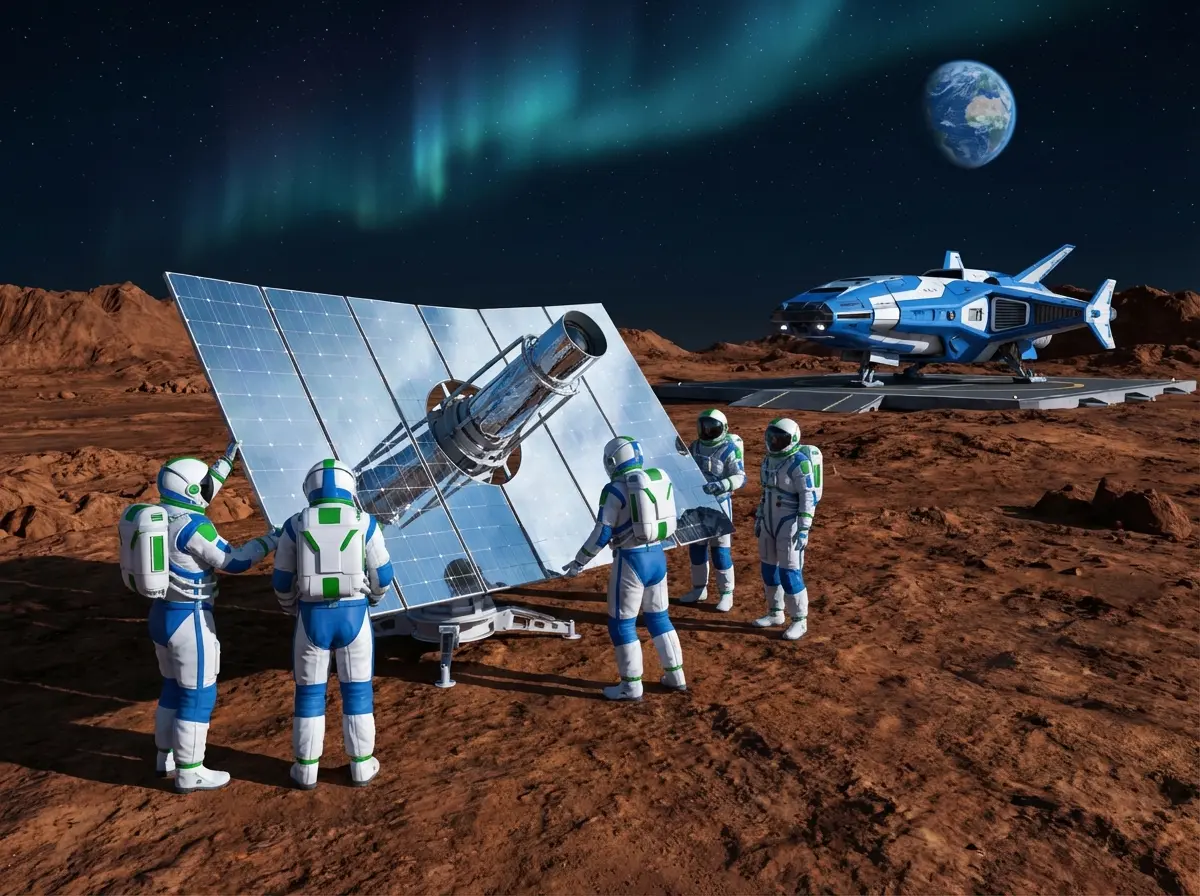
The successful launch of the James Webb Space Telescope completely revolutionized our fundamental understanding of the universe and its origins. This powerful space telescope captures faint infrared light originating from the earliest moments of cosmic history across the void. Astronomers utilize the Webb Space Telescope to study early galaxy formation right after the Big Bang occurred long ago.
Every new image from the James Webb Space Telescope provides unprecedented scientific discovery about distant exoplanets and their atmospheres. The sensitive instruments aboard the James Webb space platform can detect specific atmospheric compositions on these far-off worlds. This advanced Webb space hardware helps researchers search for potential signs of biological life elsewhere in the vast galaxy.
Closer to home, the highly anticipated Parker Solar Probe gathers vital data about our own local star and environment. The Parker Solar mission flies directly through the outer corona to measure intense magnetic fields and solar wind particles. This specialized solar probe helps researchers predict dangerous space weather that could severely impact Earth science operations and satellites.
Gathering massive amounts of data from these distant observatories requires an extensive network of ground-based communication dishes around Earth. Deep space antennas must constantly track these fast-moving targets across the night sky without any interruption to the signal. Scientists rely heavily on this uninterrupted data flow to accurately process images of distant galaxies and stellar phenomena.
Future optical instruments will likely dwarf the current generation of sophisticated orbital telescopes currently in operation above our planet. Planners envision massive mirrors assembled entirely by robotic drones floating in high orbits above our planet for better clarity. These future observatories might actually capture direct visual images of Earth-sized planets in neighboring star systems very soon.
Data collected by orbital observatories is often made available to the public after an initial proprietary period for research. This open-access approach allows independent researchers worldwide to contribute to major astronomical breakthroughs.
Returning to the Lunar Surface: The Future of Space Travel
The next major phase of space exploration involves establishing a permanent human presence on the moon for scientific research. The National Aeronautics and Space Administration plans to send modern crews back to the lunar surface very soon. Astronauts will travel inside the highly advanced Orion spacecraft for these historic and challenging lunar journeys across the void.
These upcoming missions will strategically target the lunar south pole due to its incredibly valuable and rare resource deposits. Water ice trapped in permanently shadowed craters at the lunar south could easily sustain future human outposts indefinitely. Extracting these necessary resources near the south pole drastically reduces the need to launch heavy supplies from Earth.
Before touching down, crews will spend time in a newly constructed lunar orbit facility called the Gateway station. This specialized station will serve as a crucial staging point for landers heading down to the dust and regolith. It represents a massive step forward in NASA’s space program capacity for sustained extraterrestrial operations and lunar exploration.
Geologists eagerly await the fresh rock samples that astronauts will bring back from these unexplored polar craters for study. Studying untouched regolith helps researchers fully understand the incredibly violent history of our early solar system and planetary formation. These pristine rocks contain chemical records that have remained completely frozen for billions of years in the lunar shadows.
Building the Next Generation Space Station for Future Missions
The International Space Station has hosted continuous human occupation for more than two remarkable decades of scientific achievement. This massive space station serves as a vital laboratory for microgravity research and critical technology development for future missions. We must carefully plan for the international space station’s eventual transition to commercial platforms to ensure research continuity.
Private aerospace firms are already designing innovative replacements for the aging international space facility and its various modules. Several companies plan to launch their own customized space station modules into earth orbit very soon for commercial use. These commercial platforms will host government astronauts, corporate researchers, and wealthy tourists all at the same time in orbit.
Maintaining a continuous human presence in orbit remains absolutely critical for testing new life support systems and medical protocols. The current space station’s impressive legacy will live on through these next-generation commercial habitats orbiting our planet. These new facilities will allow researchers to continue their work while expanding our reach into the broader solar system.
Creating a comfortable living environment in zero gravity requires highly specialized and innovative engineering solutions for all inhabitants. Life support systems must continuously scrub carbon dioxide and regulate cabin temperature perfectly without fail for the crew. Future orbital habitats will incorporate advanced artificial intelligence to monitor these critical environmental controls automatically and ensure safety.
How Agencies Prepare for Future Space Missions
1. Define Mission Parameters
Space agencies carefully outline the specific scientific objectives and physical requirements for all future space missions. This rigorous planning phase requires significant input from thousands of specialized scientists and aerospace engineers.
2. Develop the Technology
Engineers design and rigorously test the heavy hardware needed for future space operations in extreme environments. Every single component must survive extreme temperature fluctuations and massive vibrational forces during the initial launch.
3. Train the Crew
Professional astronauts spend several years practicing complicated emergency procedures in advanced physical simulators before they launch. This extensive preparation guarantees that crews can handle unexpected mechanical failures while operating in orbit.
Preparing for Human Missions and the Future of Space Travel to Mars
Sending crews to the red planet represents the ultimate goal of modern space exploration and development for humanity. A successful trip to Mars requires massive leaps in our current technological and medical capabilities to ensure crew safety. The sheer distance involved makes this kind of space travel incredibly dangerous and highly complicated for even the most experienced astronauts.
Planners at NASA Mars facilities are aggressively studying how human bodies react to extended physical isolation during long-duration missions. Prolonged human spaceflight causes severe muscle atrophy, bone density loss, and dangerous cosmic radiation exposure for the entire crew. Solving these complicated medical challenges is absolutely critical before we launch human missions across the broader solar system.
We must also develop extremely reliable life support systems for deep space exploration initiatives and long-term transit vehicles. Every single drop of water and breath of air must be recycled during these long journeys to Mars. Deep space vehicles need robust hardware that can operate flawlessly without any immediate resupply from Earth for several years.
Communication delays present another massive logistical hurdle for crews traveling millions of miles away from their home planet. Radio signals take up to twenty minutes to travel from Mars back to ground control stations on Earth. Mission control cannot provide real-time assistance during emergencies, requiring the crew to operate completely autonomously in deep space.
Overcoming Deep Space Challenges
Engineers continually test emerging technologies to make interplanetary trips significantly faster and much safer for astronauts and cargo. Better propulsion systems could drastically reduce the total transit time between Earth and the Martian surface for future crews. Faster transit ultimately means less radiation exposure and fewer required supplies for the traveling crew during the long journey.
Uncrewed probes like the Europa Clipper pave the way by testing advanced autonomous navigation techniques in deep space. These robotic missions gather critical data that heavily informs our broader international space policy decisions and future mission planning. They successfully demonstrate autonomous operations that future human crews will rely on during their long-distance flights.
Researchers are also examining how supersonic flight dynamics apply directly to atmospheric entry on the surface of Mars. The exceptionally thin Martian atmosphere provides very little drag to slow down heavy landing craft during the descent phase. Engineers must design massive heat shields and specialized parachutes to safely deliver large equipment payloads to the surface.
Protecting sensitive computer electronics from cosmic radiation is just as important as protecting fragile human tissue during the flight. High-energy particles can easily corrupt computer memory and destroy critical navigation sensors during the long interplanetary transit. Engineers shield these vital components with heavy metals and install redundant backup processing units for maximum safety.
Cosmic radiation poses one of the most significant threats to interplanetary travel for human crews heading toward Mars. Without adequate shielding, astronauts face severe long-term health risks that could compromise the entire mission.
The Future of Space Travel for Everyone
The next fifty years of space travel will look vastly different than the previous fifty years of exploration. Expanding commercial space operations will eventually make standard orbital access available to thousands of ordinary people for various purposes. Routine space exploration will shift from a strict government monopoly to a bustling global economic sector for all.
We are already seeing the early foundations of a massive orbital economy being built today by innovative companies. Firms plan to manufacture specialized materials and experimental pharmaceuticals in zero gravity environments above Earth for global distribution. These valuable products will benefit people on Earth while funding further expansion into the broader solar system.
You might eventually book a ticket for space tourism just like a standard commercial airline flight today. While prices remain exceptionally high today, increased market competition and reusable rockets will drive down costs for everyone. The dream of regular civilian space missions is rapidly becoming a very tangible reality for the next generation.
Educational institutions are already adapting their academic programs to train the next generation of aerospace engineers and scientists. Universities offer specialized degrees in orbital mechanics, zero-gravity manufacturing, and experimental extraterrestrial agriculture for future space careers. This rapidly growing talent pool will provide the skilled workforce needed for massive orbital construction projects and exploration.
- Developing reliable life support systems remains absolutely critical for long-distance interplanetary travel across the broader solar system.
- Future lunar outposts will heavily rely on extracting local resources like frozen water ice found at the poles.
- The continued expansion of orbital infrastructure requires strong partnerships between governments and private industry for long-term success.
Conclusion
Our ongoing push for aggressive space exploration and the future of space travel continuously tests human engineering boundaries. We have successfully transitioned from basic orbital flights to planning permanent settlements on other planetary bodies within our reach. The incredible pace of technological innovation suggests a very bright future for our species among the distant stars.
The continued evolution of modern space travel relies heavily on collaboration between governments and private enterprises around the world. This critical partnership accelerates hardware development while sharing the massive financial burdens of building orbital infrastructure for all. You can learn more about these collaborative efforts by reviewing [current aerospace funding models] for more information.
We stand at the very beginning of humanity’s exciting expansion into the broader solar system and beyond our home. Every new telescope, automated probe, and heavy rocket launch brings us closer to a multi-planetary existence for humanity. The stars are no longer out of reach for those willing to build the necessary path forward today.