
Planning an African safari can feel as vast and intimidating as the Serengeti itself. With countless options for lodges, parks, and tours, it’s easy to get lost. But what if the most important choice isn’t about money, but about matching the trip to your travel personality?
Think about your usual vacation style. Are you an all-inclusive resort person who loves every detail handled, or a road-tripping adventurer who craves flexibility? Choosing a safari follows the same logic, with “luxury” and “budget” representing different styles of travel more than different qualities of wildlife viewing.
To simplify your planning, it helps to understand the real differences between tour types and define your own “safari personality.” This gives you the confidence to choose the perfect adventure, not just the one with the biggest price tag.
What Does ‘Luxury’ vs. ‘Budget’ Actually Mean on a Safari?
When planning a safari, the terms ‘luxury’ and ‘budget’ mean more than just a price tag. They describe the entire style of your adventure, from how you see the animals to where you sleep at night. Understanding the difference helps you find the perfect trip for your travel style, not just your wallet.
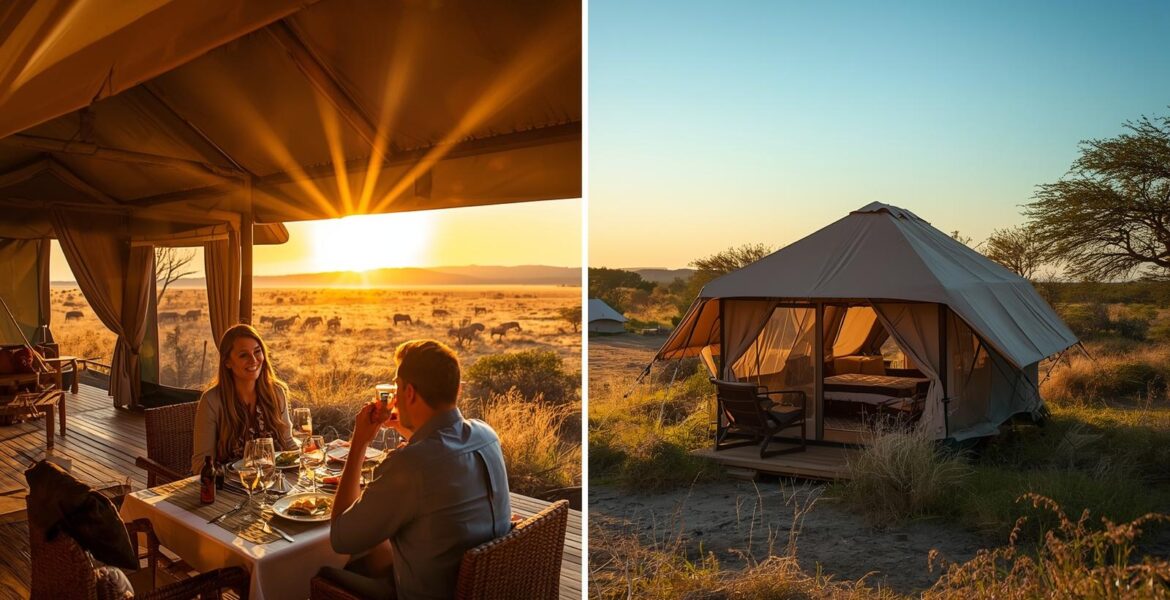
Your experience is shaped by three main choices: accommodation, transport, and location. For accommodation, you might choose a solid-walled lodge that feels like a rustic hotel, a glamorous tented camp with a real bed and en-suite bathroom, or simple dome-tent camping. For transport, a private 4×4 vehicle offers personal space, while a shared group van is more sociable and cost-effective. Finally, you might be in a bustling public national park, or an exclusive private reserve with far fewer visitors.
Ultimately, a ‘luxury’ price tag often buys you privacy and exclusivity—fewer people in your vehicle and in the park around you. It doesn’t always guarantee you’ll see more wildlife. A fantastic safari experience is possible on any budget; the key is choosing the style that’s right for you.
The Luxury Safari Experience: What Your Money Really Buys
So, what does that luxury price tag truly buy? It buys you space. Many high-end lodges are located in a private conservancy, a vast wilderness area shared by only a handful of camps. With far fewer vehicles around, you get front-row seats to the action, allowing for peaceful, uncrowded encounters that follow strict ethical wildlife viewing guidelines. This is the difference between watching a leopard from a line of vans and feeling like it’s just you and the wild.
This exclusivity also unlocks unique adventures. Imagine heading out after dark on a night game drive, where a special spotlight reveals the glowing eyes of a hunting leopard or a tiny bush baby. These excursions, along with guided walking safaris, are often forbidden in public national parks, making them a special privilege of the luxury safari lodge experience.
Beyond the thrilling drives, it’s about the unforgettable moments in between. It’s ending your day with a classic sundowner: stepping out of the vehicle as your guide sets up a small bar with drinks and snacks to watch the sun paint the savanna gold.
Your Guide to an Unforgettable Budget-Friendly Safari
An incredible safari doesn’t require a five-star budget. Some of the best budget-friendly African safaris put you in the driver’s seat. In countries like South Africa, a self-drive safari is a fantastic choice, letting you explore well-maintained park roads in a rental car, on your own schedule. This independence gives you the freedom to spend an hour watching a giraffe nibble on an acacia tree, just because you can.
If you prefer a guide without the private tour price, consider a group “overland” tour. You’ll join fellow adventurers, often camping or staying in simple lodges. It’s a social, guided experience with all logistics handled for you at a fraction of the cost. This option is perfect for solo travelers or anyone who wants a built-in community while exploring the wild.
With a self-drive, you control the budget. Your Kruger National Park safari planning, for example, can include a standard car and affordable park-run lodging. You buy your own groceries and decide where to splurge—just like any road trip—making an epic wildlife adventure surprisingly affordable.
Kenya vs. Tanzania vs. South Africa: Where Does Your Budget Go Furthest?
When it comes to your budget, not all safari destinations are created equal. For travelers keeping a close eye on costs, South Africa is often the most affordable choice, largely thanks to the popular self-drive safari South Africa guide model. This DIY approach allows you to control your spending on lodging and food, cutting out the major expense of a private vehicle and guide.
In contrast, East Africa offers a different experience. When comparing a Kenya vs. Tanzania safari, you’ll find they are primarily guided-tour destinations. A major, often overlooked, factor in how much a Tanzania safari costs is the daily park conservation fee. These fees—which can be over $80 per person, per day in popular parks—are bundled into your tour price and are essential for protecting the wildlife you’ve come to see.
This means that while Kenya and Tanzania deliver those classic, sweeping savanna views with a guide, South Africa offers more independence for your money. Of course, your destination isn’t the only factor that sways the price tag.
When to Go: How the ‘Best Time for Safari’ Affects Your Wallet
Beyond your destination, the biggest factor in your safari’s cost is when you go. Most people target the Dry Season, the best time of year for an African safari because animals are easier to spot near waterholes. But this high demand means peak-season prices.
The Wet Season, in contrast, offers lush green landscapes, newborn animals, and lower prices, though wildlife is more spread out. This weather also makes your malaria prevention for safari travelers plan essential, so be sure to consult your doctor about your specific itinerary.
The real sweet spot is the Shoulder Season—the weeks bridging wet and dry. You get great weather, abundant wildlife, and prices that haven’t peaked. Shifting your dates slightly can save a fortune.
Your First 3 Steps to Booking the Right Safari
Now that you’re equipped with the knowledge to choose a tour that’s right for you, it’s time to turn your research into reality. Here is a simple, three-step action plan:
- Define Your ‘Safari Personality’ & Budget: Are you a comfort-seeking ‘Lodge Lounger’ or an adventurous ‘Camping Explorer’? Set a realistic per-person budget.
- Pick Your ‘Where’ & ‘When’: Choose one region (e.g., East Africa) and a target travel season to focus your research.
- Get 3 Quotes & Compare: Contact three well-reviewed safari operators. Give them your budget, style, and dates, and compare their proposals line-by-line.
Instead of just dreaming about a safari, you can start planning your specific adventure—whether it’s a solo escape or one of many family friendly safari holidays. The journey begins with these first steps.