
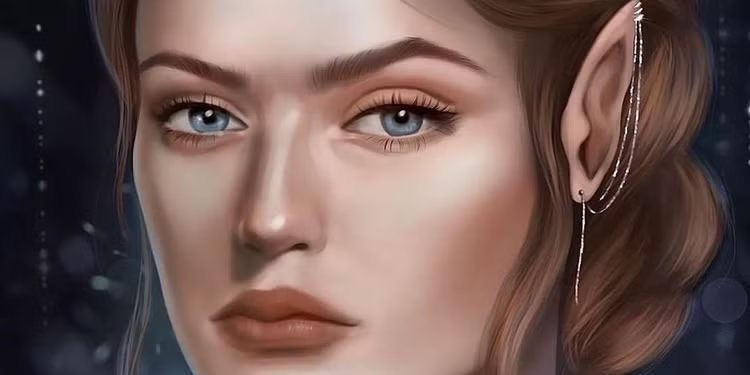
If you’ve found yourself completely absorbed by Sarah J. Maas’s fantasy romance series, you’re not alone. The A Court of Thorns and Roses characters have captured millions of readers’ hearts worldwide, sparking endless discussions, fan art, and heated debates about character choices and relationships. But what makes these characters so compelling? Why do readers form such strong connections to Feyre, Rhysand, and the rest of the Night Court?
In this comprehensive guide, we’ll explore the main and supporting characters that make ACOTAR unforgettable, analyze their development across the series, and understand why these fictional fae have become cultural phenomena in the fantasy romance community.
Understanding the World of A Court of Thorns and Roses
Before diving into individual characters, it’s essential to understand the world they inhabit. The A Court of Thorns and Roses characters exist in a realm divided between the mortal lands and the fae territories of Prythian, which is further split into seven courts—Spring, Summer, Autumn, Winter, Dawn, Day, and Night.
This setting creates a rich backdrop for character development, where political intrigue, ancient magic, and personal trauma intersect. The characters aren’t just navigating romance; they’re dealing with:
- Centuries-old power dynamics
- The aftermath of war and enslavement
- Personal healing and growth
- Complex moral choices without clear right answers
Main Characters: The Core of the ACOTAR Series
Feyre Archeron: The Heart of the Story
Feyre begins as a mortal huntress struggling to feed her family and evolves into one of the most powerful High Fae in Prythian. Her character arc represents one of the most comprehensive transformations in modern fantasy romance.
Character Development Highlights:
- Books 1-2: From survival mode to discovering her own worth
- Books 3-5: Learning to wield power while maintaining humanity
- Growth from reactive to proactive decision-making
- Healing from trauma while building healthy relationships
What makes Feyre resonate with readers is her relatability despite her extraordinary circumstances. She makes mistakes, struggles with self-worth, and doesn’t become perfect just because she gains power.
Rhysand: Beyond the Dark and Mysterious Love Interest
Rhysand challenges the typical “dark, brooding male” trope by combining strength with emotional intelligence. As High Lord of the Night Court, he demonstrates that true power includes:
- Respecting consent and autonomy
- Leading with both strength and compassion
- Showing vulnerability without losing authority
- Supporting his partner’s independence
His character sparked important conversations in the romance community about what healthy relationships look like in fantasy settings.
Tamlin: The Complicated Antagonist
Among A Court of Thorns and Roses characters, Tamlin might be the most divisive. His arc from love interest to antagonist showcases how:
- Good intentions don’t excuse harmful behavior
- Trauma can lead to controlling behavior patterns
- Character regression can be as realistic as growth
- Not all relationships are meant to last, even with love present
Readers’ reactions to Tamlin often reflect real-world experiences with relationships that started well but became unhealthy.
Nesta Archeron: Trauma, Rage, and Redemption
Nesta’s journey in the later books addresses themes often overlooked in fantasy romance:
- Different trauma responses and healing timelines
- Self-destructive behavior as a coping mechanism
- The difference between being “difficult” and being hurt
- Finding purpose after devastating loss
Her character resonates particularly with readers who’ve experienced their own struggles with mental health and family dynamics.
Elain Archeron: The Underestimated Sister
While often overshadowed by her sisters, Elain’s character represents:
- Quiet strength versus loud power
- The validity of choosing peace over violence
- Navigating unwanted gifts and destiny
- The complexity of kindness in a harsh world
Fan discussions about Elain often center on her untapped potential and what her future books might reveal.
The Inner Circle: Found Family Done Right
The A Court of Thorns and Roses characters that make up Rhysand’s Inner Circle exemplify the “found family” trope that readers adore:
Mor (Morrigan)
- Represents LGBTQ+ representation in fantasy
- Deals with family trauma and living authentically
- Balances power with warmth
Cassian
- Subverts “dumb warrior” stereotypes with emotional depth
- His relationship with Nesta shows patience and understanding
- Demonstrates male friendship and vulnerability
Azriel
- The quiet, observant member with hidden depths
- Represents those who process emotions internally
- Subject of intense fan speculation about future storylines
Amren
- Ancient power in small form
- Character arc about choosing connection over isolation
- Unique perspective as an outsider to fae culture
Supporting Characters Who Steal Scenes
Lucien Vanserra
Lucien’s journey from Tamlin’s emissary to finding his own path showcases:
- Choosing personal values over loyalty to toxic situations
- The complexity of mate bonds
- Finding where you belong
The High Lords
Each High Lord (Tarquin, Helion, Kallias, Thesan, Beron) adds depth to Prythian’s political landscape and represents different leadership styles and moral complexities.
Why These Characters Connect With Readers
The A Court of Thorns and Roses characters have spawned countless fan theories, art, and discussions because they:
1. Deal With Real Issues Through Fantasy
- PTSD and trauma recovery
- Toxic versus healthy relationships
- Finding self-worth
- Family dynamics and chosen family
- Consent and autonomy
2. Show Genuine Character Growth
Characters don’t just claim to change—they demonstrate it through actions and choices across multiple books.
3. Subvert and Play With Tropes
Sarah J. Maas takes familiar fantasy romance tropes and adds complexity, making them feel fresh rather than formulaic.
4. Create Strong Relationships Beyond Romance
Friendships, sisterhood, and found family receive as much development as romantic relationships.
Character Relationships and Dynamics
Romantic Pairings
The series explores various relationship dynamics:
- Feyre and Rhysand: Partnership built on equality and choice
- Nesta and Cassian: Healing together while maintaining independence
- Elain’s Future: Subject of intense reader speculation
Friendships and Bonds
The platonic relationships often rival the romances in importance:
- The bond between the Archeron sisters
- The brotherhood of Cassian, Azriel, and Rhysand
- Female friendships across the series
Character Development Across the Series
One remarkable aspect of A Court of Thorns and Roses characters is how they evolve:
Book 1 (ACOTAR): Introduction and initial impressions often prove misleading Book 2 (ACOMAF): Major revelations reshape understanding of earlier events Book 3 (ACOWAR): Characters face consequences and make difficult choices Book 4 (ACOFAS): Quiet character moments and healing Book 5 (ACOSF): Deep dive into previously secondary characters
Common Reader Questions About ACOTAR Characters
Who is the most powerful character? Power in ACOTAR isn’t just about magic—it’s about influence, emotional strength, and choice. While Rhysand and Feyre hold immense magical power, characters like Nesta and Amren demonstrate different types of strength.
Why do readers have such strong opinions about these characters? The characters deal with morally complex situations without easy answers, leading to passionate discussions about their choices and relationships.
Will we get more character POVs in future books? Sarah J. Maas has indicated plans for more books featuring different perspectives, likely including Azriel and Elain.
How do the characters compare to Maas’s other series? While sharing some DNA with Throne of Glass characters, ACOTAR characters tend to focus more on personal relationships and healing rather than large-scale political plots.
The Cultural Impact of These Characters
The A Court of Thorns and Roses characters have transcended the books themselves:
- BookTok and Social Media: Character discussions dominate fantasy romance communities
- Fan Art: Thousands of artists have depicted their interpretations
- Casting Debates: Endless speculation about potential adaptations
- Merchandise: From fan-made to official products celebrating favorite characters
What Makes Sarah J. Maas’s Character Writing Effective
Several techniques make these characters memorable:
- Flawed protagonists: No character is perfect, making them relatable
- Consequences matter: Actions have lasting impacts
- Internal consistency: Characters behave according to their established traits
- Growth feels earned: Development happens through experience, not convenience
- Multiple perspectives: Seeing characters through different eyes adds depth
Key Takeaways: Understanding ACOTAR Characters
- Complexity is key: These aren’t simple archetypes but multifaceted individuals
- Trauma and healing: The series takes mental health and recovery seriously
- Relationships evolve: Both romantic and platonic bonds develop realistically
- Power dynamics matter: The books explore healthy versus unhealthy uses of power
- Reader interpretation varies: The same character can resonate completely differently with different readers
Final Thoughts: Why These Characters Endure
The A Court of Thorns and Roses characters continue to captivate readers because they represent our own struggles with identity, relationships, trauma, and growth—just wrapped in wings, magic, and immortality. They’re aspirational without being unrealistic, flawed without being irredeemable, and powerful without being invincible.
Whether you’re Team Rhysand or still processing your feelings about Tamlin, whether Nesta’s journey resonated deeply or you’re eagerly awaiting Elain’s story, these characters have created a community of passionate readers who find meaning in their fictional journeys.
What’s your take on the ACOTAR characters? Which one resonates most with you and why? The beauty of Sarah J. Maas’s creation is that there’s no single “right” answer—each reader brings their own experiences and finds different connections within Prythian’s courts.