

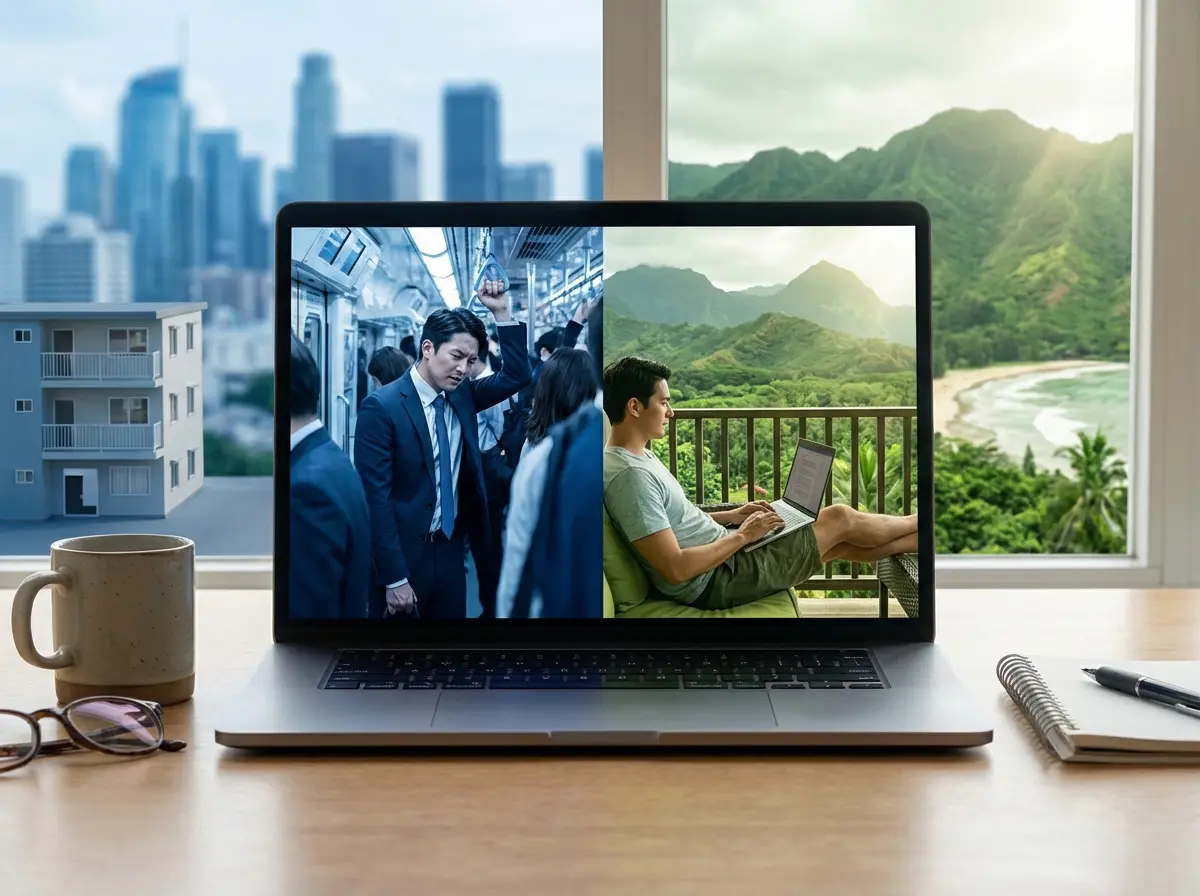
Have you ever considered trading your daily commute for a passport and a laptop to embrace the digital nomad lifestyle? Remote work fundamentally changed how millions of American professionals view their long-term careers and daily routines. You no longer need to commute to a central corporate office daily to perform high-level operational tasks.
This massive cultural shift birthed a significant surge in the digital nomad lifestyle over recent years. People eagerly trade permanent residences for short-term rentals in global cities while maintaining full-time employment. We will thoroughly explore the mechanics, economics, and practical realities of taking your career on the road.
Many people mistakenly picture remote workers lounging on tropical beaches with a laptop balancing on their knees. The actual reality looks much more structured and requires serious professional discipline to maintain long-term career success. A digital nomad is simply a highly skilled professional who utilizes modern technology to work remotely while traveling constantly.
This rapidly growing demographic now includes freelance creatives, software engineers, independent consultants, and those holding full-time remote jobs. They leverage high-speed internet connections to fulfill their daily job duties from local coffee shops or temporary apartments. The core philosophy centers completely on location independence rather than treating every single destination like a continuous vacation.
Many traditional corporations initially resisted this massive transition due to outdated management philosophies and lingering productivity concerns. However, recent economic data clearly demonstrates that remote workers frequently outpace their office-bound counterparts in total output. This proven reliability gives modern professionals the vital leverage needed to negotiate permanent location independence.
Remote Work Economics: The Financial Impact of Location Independence
Taking your regular job on the road presents distinct financial advantages and challenges for American workers. Many location-independent professionals practice geographic arbitrage to maximize their earning power and build substantial wealth. They earn strong United States dollars while physically living in foreign countries with a significantly lower cost of living.
This financial strategy allows remote workers to save aggressively for retirement or pay down expensive student loan debt. However, traveling frequently also introduces hidden lifestyle costs that can quickly drain a poorly managed monthly budget. Short-term housing rentals, international health insurance premiums, and constant transit fees add up incredibly fast.
You must budget your resources carefully to maintain financial stability while moving frequently between different international cities. Tracking every expense becomes a mandatory habit for anyone planning to sustain this lifestyle over multiple years. Many successful nomads utilize dedicated software applications to monitor their cross-border spending and manage currency conversion rates.
- Geographic arbitrage allows you to earn US dollars while spending in currencies with lower living costs.
- Hidden travel expenses like short-term rentals and international insurance require strict monthly budgeting habits.
- Financial tracking software helps mobile professionals manage multiple currencies and monitor cross-border spending effectively.
Digital Nomad Taxes: Managing Tax Residency for US Citizens Abroad
United States citizens face highly specific legal hurdles when working abroad for extended periods of time. The internal revenue service taxes citizens on their worldwide income regardless of where they physically reside. You must file federal tax returns every single year even if you spend zero days in America.
Many traveling professionals establish a legal domicile in specific states without any local income tax obligations. Establishing tax residency in places like Florida, Texas, or South Dakota requires setting up a permanent mailing address. This legal strategy helps limit state-level tax liabilities while you travel continuously across international borders.
You should always consult an international tax professional to structure your global finances legally and efficiently. Qualifying for the foreign earned income exclusion requires passing strict physical presence tests during the tax year. Proper documentation of your travel dates and housing arrangements will protect you during potential government audits.
Failing to file your United States federal tax returns while living abroad carries severe financial penalties. The government can legally revoke your passport if you accumulate significant unpaid tax debts while traveling internationally.
Global Health Insurance: International Health Insurance Strategies for Remote Workers
Maintaining proper health coverage presents a major logistical challenge for Americans leaving their domestic healthcare system. Traditional United States health insurance policies rarely provide adequate coverage once you cross international borders. You must secure comprehensive international health insurance to protect yourself against catastrophic injuries or unexpected severe illnesses.
Many specialized insurance providers now offer policies built specifically for continuous travelers and long-term expatriates. These plans typically cover emergency medical evacuations, routine doctor visits, and prescription medications in almost any country. You should carefully review policy exclusions regarding extreme sports or travel to specific high-risk geographic regions.
Some remote workers choose to pay out of pocket for minor medical expenses in countries with affordable healthcare. Nations across Southeast Asia and Latin America offer excellent private medical facilities at a fraction of American prices. However, carrying a high-deductible international insurance policy remains essential to prevent total financial ruin during emergencies.
Remote Work Tools: Essential Technology for a Location Independent Career
Your ability to earn an income depends entirely on your immediate access to reliable technological infrastructure. You cannot afford to lose connection during an important client presentation or a crucial team meeting. Professional nomads invest heavily in redundant remote work tools and premium hardware to maintain their corporate productivity.
This critical equipment typically includes a primary laptop, a backup tablet, and multiple international power adapters. Savvy travelers also carry portable cellular hotspots to guarantee internet access during unexpected local network outages. Your hardware must withstand the physical rigors of constant packing and transit through busy international airports.
Digital security also plays a critical role when connecting to public Wi-Fi networks in foreign cafes. A high-quality virtual private network protects your sensitive corporate data from potential breaches and malicious local actors. Check out our guide on [secure remote work practices] for more detailed cybersecurity protocols.
Career Transition: How to Build a Sustainable Location-Independent Career
Are you ready to leave the traditional office behind for a life of continuous travel? Moving from a traditional office job to a nomadic lifestyle requires careful planning and deliberate execution. You cannot simply pack a suitcase and expect your professional life to function perfectly from day one.
How to Get Started
1. Audit Your Current Role
Analyze your daily tasks to determine if your specific job actually requires a physical office presence.
2. Negotiate Remote Terms
Propose a structured trial period of remote work to your current managers before asking for permanent approval.
3. Establish a Legal Base
Set up a virtual mailbox service and update your state residency status before leaving the country.
Remote Work Challenges: Overcoming Obstacles in the Nomadic Lifestyle
Living out of a suitcase while maintaining a demanding career brings significant psychological and emotional hurdles. Deep loneliness ranks as the highest complaint among long-term location-independent professionals surveyed in recent industry studies. Building a supportive community takes intentional effort when you switch cities every three to six months.
Drastic time zone differences also create massive scheduling headaches for workers attached to United States teams. Waking up at midnight in Asia to attend a morning meeting in New York quickly leads to burnout. You must establish strict boundaries around your working hours to protect your mental health and physical well-being.
Joining local co-working spaces helps create a sense of daily routine and provides immediate professional networking opportunities. Many digital nomads also attend specialized remote work conferences to build relationships with like-minded global travelers. Finding a healthy balance between professional obligations and local exploration remains an ongoing process for every remote worker.
- Combat isolation by actively joining local co-working spaces and attending international networking events for remote workers.
- Set strict boundaries around your working hours to prevent burnout caused by extreme time zone differences.
- Prioritize your mental health by establishing a consistent daily routine regardless of your physical location.
Global Mobility Trends: The Future of Remote Work and Digital Nomad Visas
Will traditional office spaces eventually become obsolete as remote work continues expanding globally? The global infrastructure supporting mobile professionals continues to mature rapidly as remote work gains mainstream acceptance. Dozens of countries now offer specific digital nomad visas targeting high-earning remote workers and independent digital contractors.
Corporate attitudes also shifted dramatically regarding where their full-time employees can physically reside and operate daily. Major technology companies now build distributed teams across multiple continents by default rather than as an exception. This broad acceptance normalizes the lifestyle and provides much more stable career paths for traveling professionals.
The primary focus shifted from convincing reluctant employers to allow remote work to optimizing the distributed experience. Human resources departments now actively develop policies to support employees who choose to travel continuously. The digital nomad lifestyle will likely become a standard working arrangement for millions of American professionals.
Conclusion
The digital nomad lifestyle represents a fundamental shift in how modern professionals approach their long-term careers. It requires intense discipline, careful financial planning, and a remarkably strong tolerance for daily logistical ambiguity. You trade the predictable comfort of a permanent home for the absolute freedom to work from anywhere in the world.
Your ultimate success depends heavily on your ability to maintain professional output while managing complex travel logistics. Those who master this delicate balance often report higher job satisfaction and significantly better overall mental well-being. Start small by taking a short remote work trip before committing to full-time international travel.
With the right preparation and mindset, you can build a sustainable and highly rewarding location-independent career. The tools and infrastructure required to succeed from anywhere in the world are finally widely available. Now is the perfect time to redesign your professional life and embrace the freedom of remote work.