
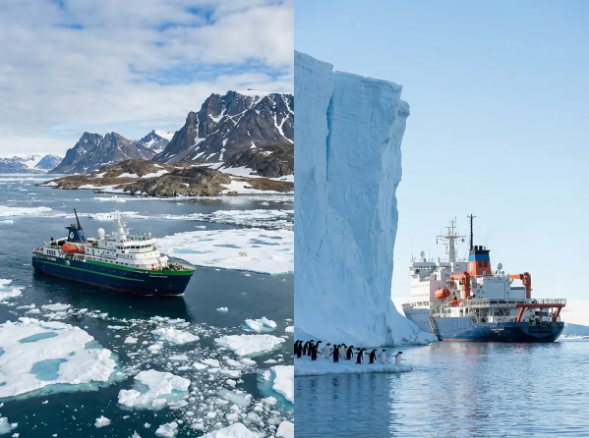
Have you ever wondered what it takes to explore the frozen top of the world? An arctic cruise presents a remarkable opportunity to experience one of the most remote and unforgiving regions left on Earth. Travelers often dream of an arctic expedition to witness massive glaciers, deep fjords, and elusive polar bears thriving in their natural habitat. This journey requires careful planning and a solid understanding of the severe polar environment for successful Arctic travel.
You will quickly find that sailing through the high latitudes differs significantly from standard tropical vacations in almost every way. The extreme environmental conditions demand specialized ice-strengthened vessels, highly experienced guides, and incredibly specific cold-weather gear. We will carefully examine everything you must know to plan a highly successful polar cruise to these northern waters.
Many travelers debate between heading north to the Arctic or south to Antarctica for their next polar expedition. An arctic cruise offers distinct advantages that appeal to specific types of dedicated adventurers and nature enthusiasts. The northern hemisphere provides rich cultural interactions with Indigenous communities that have inhabited these lands for thousands of years.
You can visit remote Inuit villages during a Greenland cruise or explore the rugged wilderness of a Svalbard cruise to learn about traditional ways of life. Antarctica entirely lacks a native human population, making the northern journey much more culturally significant for visitors. The wildlife profile also shifts dramatically depending on which pole you choose to visit during your expedition cruise vacation.
The north holds the monopoly on Arctic wildlife like polar bears, walruses, and narwhals, which draw wildlife enthusiasts from across the United States. Furthermore, reaching the northern polar region requires significantly less transit time for American travelers departing from major cities. You can often take a direct flight from major US hubs to departure ports in Svalbard, Iceland, or Canada.
- The Arctic offers rich cultural encounters with Indigenous communities that Antarctica completely lacks.
- Northern expeditions require significantly less travel time and fewer complex flight connections for US residents.
- Only the northern hemisphere provides opportunities to observe polar bears and walruses in the wild.
Determining the Best Time of Year for an Arctic Cruise and Polar Expedition
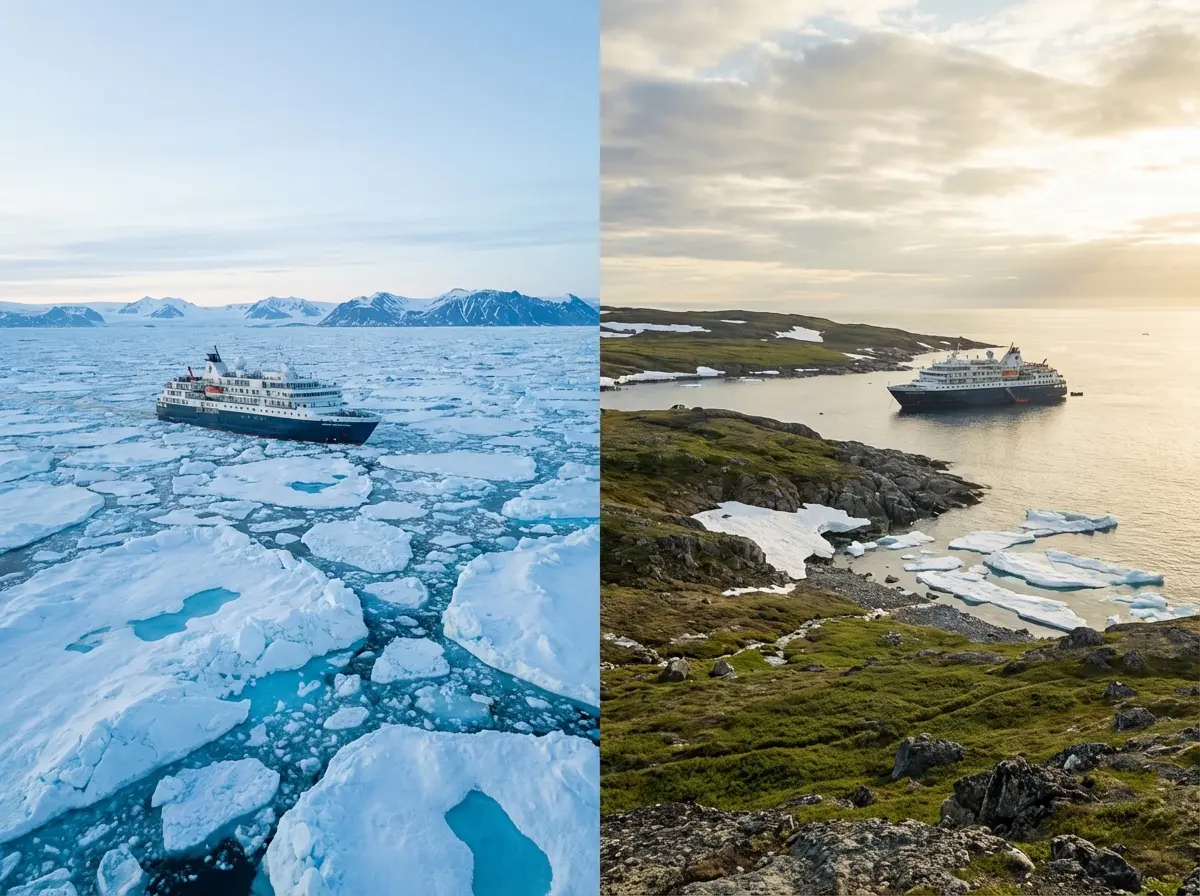
The sailing season for an arctic cruise remains incredibly short due to thick sea ice and extreme winter darkness. Passenger vessels typically operate in these northern waters exclusively between the months of June and September. Each month offers a distinctly different experience based on ice melt, wildlife behavior, and available daylight hours.
Early Season: June and the Midnight Sun
June provides the best opportunity to see dramatic ice formations and brilliantly snow-covered terrain. The sea ice begins to break up, allowing expedition ships to push through newly opened ocean channels. You will experience the famous midnight sun, providing 24 hours of continuous daylight for uninterrupted wildlife photography.
Peak Season: July and August Arctic Travel
Temperatures reach their highest points during July and August, occasionally climbing into the low 50s Fahrenheit. The retreating ice allows ships to access deeper into remote fjords and fully circumnavigate islands like Spitsbergen. Tundra flowers bloom rapidly, covering the rugged terrain in brief but incredibly vibrant patches of summer color. This period marks the absolute height of the tourist season, bringing higher prices and increased vessel traffic.
Late Season: September Expedition Cruise
September signals the rapid approach of winter as temperatures drop and darkness slowly returns to the region. The changing seasons create stunning atmospheric light that professional landscape photographers actively seek out during their travels. Wildlife begins migrating south, and operators start moving their ships toward the southern hemisphere for the Antarctic summer.
Book your polar expedition at least 12 to 18 months in advance. The strictly limited passenger capacities on expedition ships mean that prime mid-summer cabins sell out incredibly fast.
Spotting Rare Arctic Wildlife: Polar Bear Sightings and Marine Life
Spotting rare animals serves as the primary motivation for most people booking an arctic cruise today. The apex predator of the north, the polar bear, dominates the ice floes and the attention of passengers. Guides use high-powered optics to scan the horizon constantly for these magnificent and powerful marine mammals.
Beyond the famous bears, the nutrient-rich northern waters support a massive and active population of cetaceans. Passengers frequently observe beluga whales, bowhead whales, and massive pods of feeding humpbacks near the glacial edges. Walruses gather in large groups called haul-outs on shallow beaches, creating an unforgettable and noisy sensory experience.
Bird watchers will find themselves overwhelmed by the sheer volume of Arctic wildlife clinging to coastal cliffs. Millions of migratory seabirds travel to the high north to breed during the brief but productive summer window. Thick-billed murres, black-legged kittiwakes, and colorful Atlantic puffins nest in dense colonies along the rocky coastlines.
Expert Packing for Your Arctic Expedition: Gear for Extreme Polar Conditions
What specific gear will keep you comfortable in sub-zero temperatures while riding in an open boat? Packing for an arctic cruise requires a strategic approach to layering and highly specific material selection. You cannot rely on heavy, bulky winter coats that severely restrict your movement during active shore landings.
How to Layer for Polar Landings
1. Apply Moisture-Wicking Base Layers
Start with high-quality merino wool or synthetic thermal underwear worn directly against your skin. This foundation layer draws sweat away from your body to prevent freezing during periods of inactivity.
2. Add Insulating Mid-Layers
Wear a heavy fleece jacket or a compressible down sweater over your foundational base layers. This crucial middle section traps your natural body heat and creates a reliable barrier against the cold air.
3. Finish with Waterproof Outer Shells
Complete your outfit with waterproof and windproof pants and a high-quality hooded jacket. These protective outer shells block the biting arctic wind and keep you completely dry during Zodiac excursions and boat rides.
Selecting the Best Arctic Expedition Ship and Ice-Strengthened Vessel
The specific vessel you select will strongly dictate the entire character of your arctic cruise experience. Ships range from small, rugged icebreakers carrying 50 passengers to larger vessels accommodating up to 500 guests. Smaller ships can access narrow fjords and the legendary Northwest Passage, offering much more frequent shore landings for everyone on board.
You must pay close attention to the ship’s ice class rating before making a final reservation. A higher ice class means the hull possesses the reinforced steel necessary to push through thicker pack ice safely. [polar vessel classifications] can help you better understand these highly technical maritime specifications.
While a North Pole cruise represents the ultimate journey for some, most travelers find that a regional polar cruise offers more diverse wildlife viewing. Passenger capacity strictly dictates exactly how much time you actually spend off the ship each day. Environmental regulations prohibit more than 100 passengers from landing at any single protected site simultaneously.
Open ocean crossings in the far north frequently produce severe swells that cause intense seasickness. You should consult your physician about prescription motion sickness medications before departing on your arctic expedition.
Practicing Sustainable Arctic Cruise Travel in the High North
The polar regions remain incredibly fragile and face severe environmental threats from rising global temperatures. Responsible operators prioritize sustainable practices to minimize their direct impact on the local environment and wildlife. The Association of Arctic Expedition Cruise Operators (AECO) establishes strict operational guidelines that all member companies must follow.
Modern expedition ships utilize advanced technologies to reduce their environmental footprint significantly during their voyages. Many new vessels feature hybrid propulsion systems that allow them to operate silently on electric battery power. This innovation reduces harmful carbon emissions and prevents underwater noise pollution from disturbing sensitive marine mammals.
Passengers also carry a strict personal responsibility to protect these remote destinations during their shore excursions. Guides will instruct you to carefully clean your boots before and after every landing to prevent introducing invasive species. You must maintain strict distances from wildlife and never remove natural items like rocks or animal bones from the shore.
- Select ships with fewer than 150 passengers to maximize your daily shore landing opportunities.
- Verify that your chosen cruise operator maintains an active membership in AECO for sustainable travel.
- Higher ice-class ratings allow ships to safely navigate deeper into the pack ice for better wildlife viewing.
Conclusion: Ready for Your Arctic Cruise Adventure?
An arctic cruise delivers an adventure that few other travel experiences can match in intensity or beauty. The combination of towering icebergs, indigenous culture, and rare wildlife creates powerful memories that last a lifetime. Proper preparation and highly realistic expectations remain the strict foundation of a successful polar expedition.
The high north demands deep respect, constant flexibility, and a profound appreciation for the natural world. Weather and sea ice conditions will ultimately dictate your daily itinerary, requiring you to embrace the unexpected gracefully. This unpredictability transforms a standard vacation into a genuine expedition of true geographical discovery.