
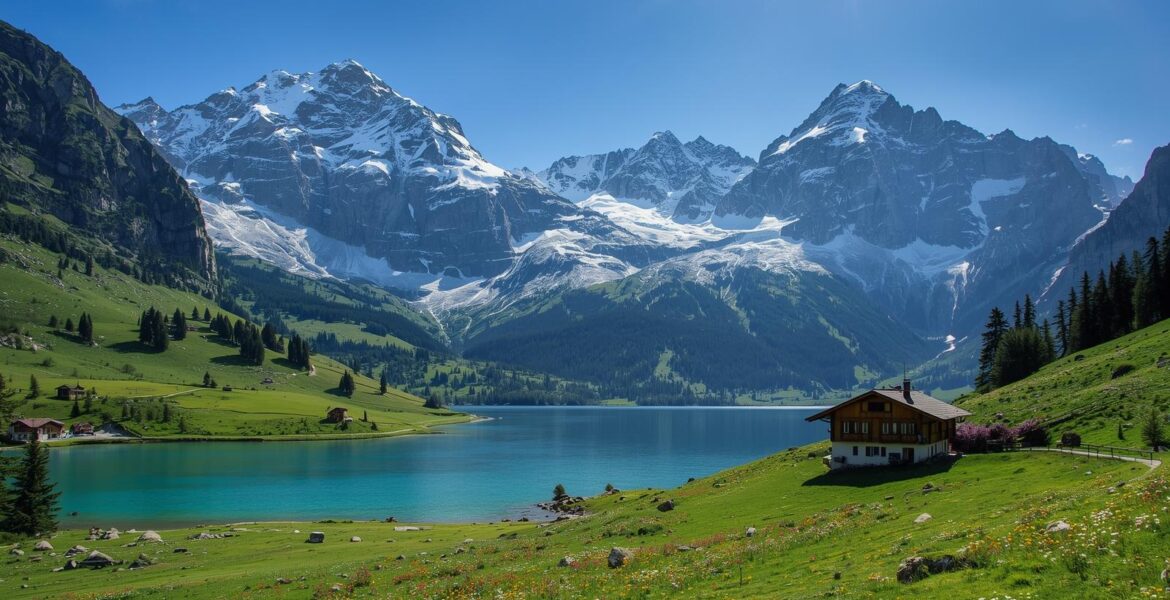
When you think of Switzerland, what comes to mind? Towering Alps, decadent chocolate, and hyper-precise watches? You’re not wrong, but those are just picture-perfect postcards. The real story is how a country with four official languages, no single president, and a fierce independence became one of the most stable and innovative nations on Earth.
This national character is the key to truly exploring the country. The famous efficiency of its train system and the pristine beauty of its cities are not happy accidents; they are the direct results of a unique Swiss culture built on consensus, local power, and a deep respect for order. Recognizing these principles transforms a trip from passive sightseeing into genuine discovery. This guide connects those cultural dots to your journey, showing how Switzerland’s system of direct democracy and its mosaic of languages shape everything from where to go to how you get around.
Zurich or Geneva? How to Choose Your Gateway by Understanding Switzerland’s Four-Sided Soul
Switzerland has four national languages, but this doesn’t mean every citizen is a polyglot. Instead, the country is a mosaic of distinct linguistic regions, each pressed up against the neighbor that shares its tongue. The vast majority of the country speaks German, with significant French and Italian-speaking populations in the west and south, respectively. This isn’t just a line on a map; it’s a fundamental cultural divider that shapes the feel of daily life and is crucial for planning your trip.
This cultural split is most obvious when comparing the country’s two largest cities. The German-speaking area, home to Zurich, often feels efficient and orderly, with a fast-paced business hum. In contrast, crossing into the French-speaking part reveals a different rhythm. In cities like Geneva, life feels more cosmopolitan and relaxed, influenced by nearby France and the city’s international diplomatic corps. Choosing between them is a guide to the kind of Swiss experience you want: structured and punctual or international and leisurely.
Seeing Switzerland this way reveals not one place, but four distinct cultures sharing a passport. You can find a Mediterranean flair in the Italian-speaking Ticino region or ancient traditions in the tiny, Romansh-speaking valleys of the east. The best part? An incredibly punctual transit system connects them all, turning a journey across the country into its own seamless cultural tour.
How to Ride the World’s Best Public Transit: Your Guide to the Swiss Travel Pass
Navigating between Switzerland’s diverse cultural regions is surprisingly simple. Getting around the country without a car is not just possible; it’s the recommended way to travel. The secret is the Swiss Travel Pass, an all-in-one ticket designed to make exploration effortless by turning the entire nation’s transit system into your personal network.
This seamless network is Swiss precision in motion. The same cultural obsession with detail that perfects a luxury watch also synchronizes the timetables of trains, buses, and even lake steamers. You don’t need to worry about connections; the system is built on the assumption that your train will arrive on time and the connecting bus will be waiting. It’s a level of reliability that feels like magic.
The pass is your key to unlocking this convenience and encouraging spontaneity.
- Unlimited train, bus, and boat travel
- Free entry to over 500 museums
- Up to 50% discount on most mountain excursions
Imagine exploring the city of Thun and, on a whim, deciding to cruise its stunning blue lake. You simply walk onto the next boat and show your pass. No lines, no new tickets, just freedom.
Of course, this level of quality comes at a price in a famously expensive country. However, when you factor in all the inclusions, the pass often becomes one of the best budget travel tips, protecting you from the constant drain of buying individual tickets.
The Surprising Reason Switzerland is Expensive (And How to Be a Smarter Spender)
The famous Swiss price tag you see on everything from train tickets to coffee isn’t designed to gouge tourists. It’s the direct result of a society that has consistently voted to ensure high wages and a strong quality of life for its workers. In Switzerland, what feels like a high price is often just the cost of a fair salary for the person serving you.
This social contract is powered by the country’s unique system of direct democracy. Swiss citizens don’t just elect representatives; they regularly vote on specific laws and policies. The stability and prosperity this creates come with high labor costs, which directly impacts the cost of a trip for any visitor.
Further complicating things, power is intensely local. The nation is a confederation of 26 cantons—think of them as powerful states like those in the U.S., each with its own constitution, taxes, and economic identity. While costs vary by canton, the underlying principle of a high-wage economy is universal.
The best budget travel tip is to do as the Swiss do. Instead of relying on restaurants for every meal, head to a local supermarket like Coop or Migros. Grabbing world-class cheese, fresh bread, and chocolate for an impromptu picnic by a lake isn’t just a money-saver; it’s an authentic and unforgettable Swiss experience.
Beyond Chocolate: What to Eat and Buy in Europe’s Innovation Hub
A supermarket picnic offers the perfect chance to discover that there’s no such thing as generic “Swiss cheese.” Instead, you’ll find hundreds of hyper-local varieties, each telling the story of its home canton. A must-try local cheese is the nutty, hard Gruyère from the French-speaking region, a world away from the milder, hole-filled Emmentaler from the German-speaking part. Exploring the cheese aisle is a delicious crash course in Swiss geography.
Of course, no Swiss experience is complete without chocolate, and the country’s fame is rooted in a specific breakthrough. Switzerland became the king of sweets in the 1870s when a chocolatier first thought to add condensed milk to the recipe, inventing the creamy, smooth milk chocolate the world now adores. This single innovation transformed a bitter treat into a global phenomenon.
This deep-seated drive for precision extends far beyond food. The same meticulous mindset that perfected cheese and chocolate is the engine behind world-leading Swiss innovation in pharmaceuticals, engineering, and technology. It’s a national character trait of getting the details exactly right—a commitment to excellence that makes exploring Switzerland so rewarding.
How to Actually Enjoy the Alps: A Guide to Interlaken and the Jungfrau Region
Switzerland’s commitment to precision isn’t just for watches; it makes the intimidating Alps surprisingly accessible. For most visitors, the key is understanding that the town of Interlaken isn’t the destination itself, but the perfect base camp. Nestled between two brilliant blue lakes, it serves as the strategic gateway to the towering peaks of the Jungfrau Region. The real magic begins where the town ends and the mountains begin.
From Interlaken, you can choose your own level of adventure, all using the flawless train network. An easy day might involve a simple ride into the spectacular Lauterbrunnen valley, famous for its 72 waterfalls. For more activity, hop off at a higher station to enjoy some of the world’s most scenic and well-marked hiking trails. The system is designed to let you get as close to nature as you’re comfortable with.
For one of the most rewarding experiences, take the cogwheel train up to Kleine Scheidegg. This is arguably one of the best scenic train rides in the Alps, as the journey itself is breathtaking. As you climb, the train delivers you to a high alpine meadow directly beneath the staggering north face of the Eiger and its two famous neighbors, the Mönch and Jungfrau. It’s here you truly grasp the scale of these famous Alpine peaks.
This accessibility allows you to experience multiple climates in a single day—from a warm, green valley to a chilly, wind-swept overlook in less than an hour. The dramatic shift in atmosphere is part of the thrill, but it also means being prepared is essential.
What to Pack for an Alpine Vacation: The Secret of Layering
The rapid shift from sunny valley to chilly peak is a classic Alpine experience, thanks to a phenomenon known as microclimates. The mountains are full of these small weather pockets, where gaining a few hundred feet of elevation can cause the temperature to drop dramatically. Packing for an Alpine vacation isn’t about bringing a huge suitcase—it’s about bringing the right, smart items.
The time-tested secret to comfort is the three-layer system, designed to handle any weather. These are the essential layers:
- Base Layer: A moisture-wicking t-shirt (synthetic or wool) that pulls sweat away from your skin to keep you dry.
- Mid Layer: A fleece or light puffy jacket that traps body heat for warmth.
- Outer Layer: A thin, waterproof and windproof shell that protects you from the elements.
This isn’t about bundling up; it’s about adaptability. You’ll start your day of hiking in Switzerland wearing one or two layers and pack the others in a small backpack, a standard practice you’ll see locals do. This allows you to add or shed layers as you move between a warm town and a windy ridge, making you comfortable no matter what the mountain decides to do. It’s a strategy so effective it makes the time of year you visit less about weather and more about preference.
Your Swiss Journey Transformed: From Tourist to Informed Traveler
With this new perspective, Switzerland is no longer just a postcard of mountains and chocolate. The punctual trains, high prices, and distinct feel of each city become pieces of a single cultural puzzle, revealing the intricate machinery of direct democracy, linguistic divides, and a culture of precision that holds it all together.
Your first challenge is simple. When you see a public vote poster in a town square or notice the language change on a train, don’t just see a curiosity. Recognize it as the engine of the nation. You’re no longer just a tourist—you’re an observer who gets the real story.