
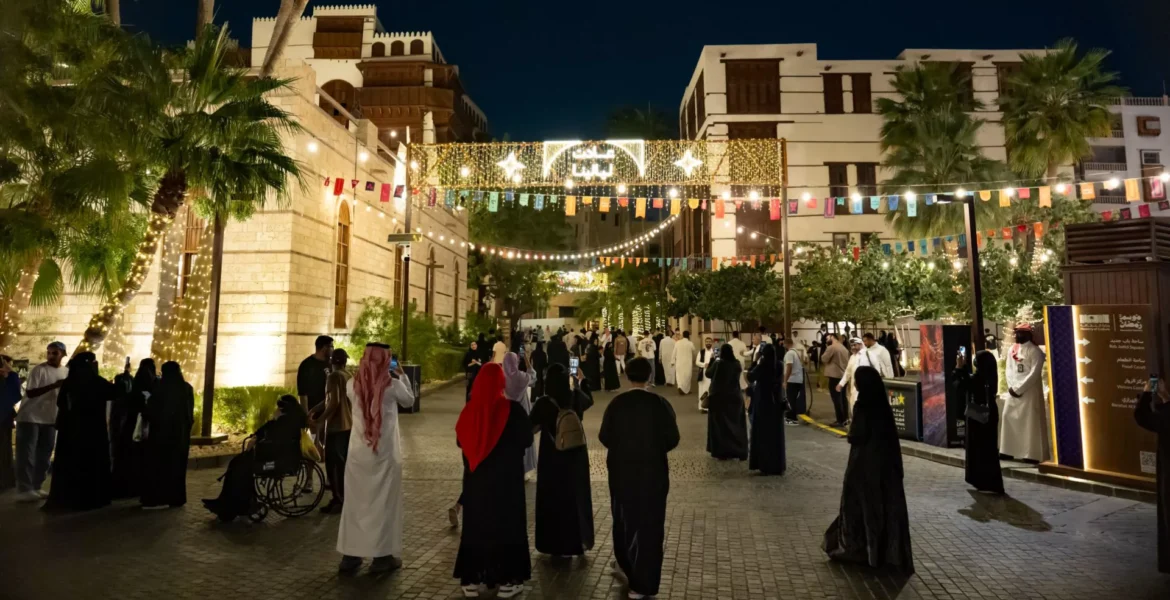
There is no better moment to understand Ramadan in Saudi Arabia than by experiencing it firsthand. Far from being a time of pause or limitation, Ramadan reveals the Kingdom at its most expressive and human. It is a period when daily life is shaped less by schedules and more by people, and when culture moves naturally into shared spaces rather than being confined behind closed doors.
During Ramadan, the rhythm of Saudi cities transforms. Mornings unfold quietly, offering a sense of calm rarely found during the rest of the year. Afternoons carry a reflective mood, while evenings burst into life with social energy. Shops open later, cafés glow after sunset, and streets fill with families reconnecting after the day’s fast. For travelers, this shift offers rare access to Saudi life as it is truly lived, rather than observed.
What makes Ramadan especially compelling is that it is guided by tradition rather than tourism. Unlike peak travel seasons shaped by festivals, weather, or global events, Ramadan follows a cultural rhythm that visitors naturally step into. Travelers don’t watch from the sidelines; they adapt alongside locals, adjusting meal times, sleep schedules, and daily routines to the same shared flow. This creates an organic sense of inclusion that feels both authentic and deeply rewarding.
Historic districts take on renewed meaning during Ramadan. As evening falls, older neighborhoods come alive with laughter, conversation, and the scent of food being prepared for iftar. Generations gather together in public spaces, reinforcing the continuity of tradition. For visitors, these moments offer emotional connection rather than curated experiences. Culture is not staged or performed—it unfolds naturally, inviting travelers to witness it as it exists every year.
Ramadan also softens formality across the country. Business slows, priorities shift, and social bonds strengthen. Public life becomes more communal, more patient, and more generous. Visitors often find interactions warmer and more personal, whether through casual conversations, shared meals, or simple gestures of hospitality. This openness allows travelers to connect with Saudi society on a human level, beyond landmarks or itineraries.
For those seeking authenticity over spectacle, Ramadan offers Saudi Arabia at its most honest. The experience feels grounded rather than polished, intimate rather than overwhelming. It encourages travelers to slow down, observe, and engage thoughtfully with their surroundings.
Traveling during Ramadan requires patience, curiosity, and respect. In return, visitors gain insight into the values that shape Saudi society—faith, generosity, family, and mutual respect. It is a time when the Kingdom feels less like a destination and more like a shared experience, one defined by connection rather than consumption.
For travelers willing to embrace its rhythm, Ramadan is not simply a time to visit Saudi Arabia. It is the most meaningful way to understand it.