
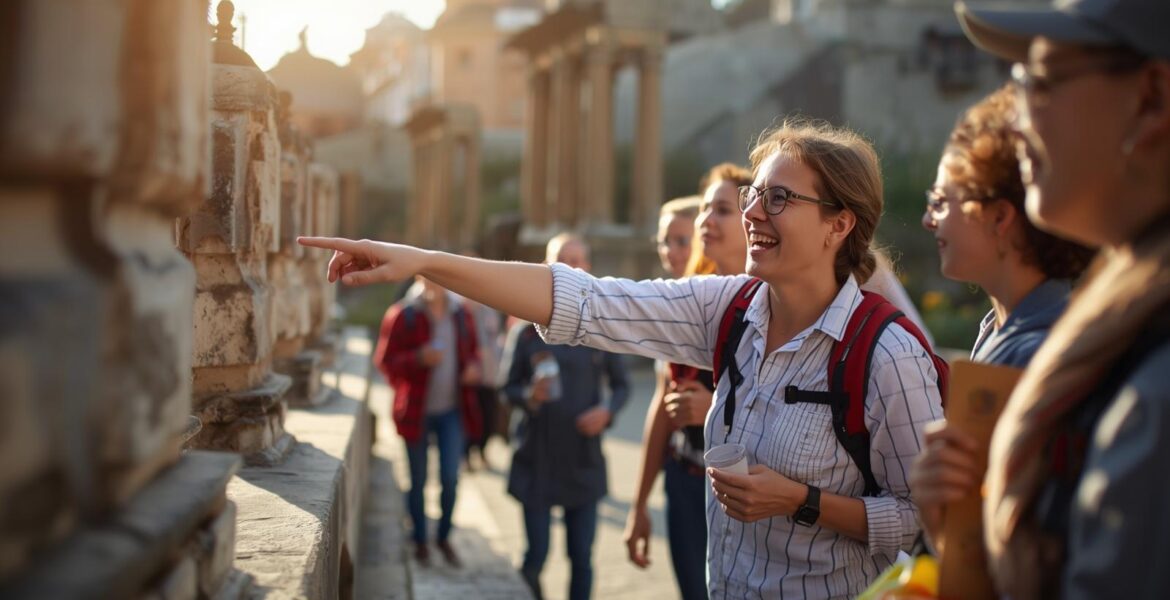
We’ve all been there. One tour guide is droning on from a script, and their group looks bored. A few feet away, another guide has their group captivated by a story you can’t quite hear. What’s the real difference?
It’s rarely about knowing more facts. Travelers often find that the most memorable moments are created when a travel expert trades the script for a stage. They perform more than they recite, connecting with people, not just pointing at places.
This isn’t magic; it’s a set of learnable skills. These skills reveal the art behind the job and show you what to look for in your next tour guide.
Guide, Director, or Operator? Decoding the Key Roles in Your Travels
Ever wondered who actually plans a vacation package? While we often just see the person at the front of the group, there’s a whole team behind the scenes. Knowing their roles is surprisingly helpful, especially if you need to know who to ask for help.
Think of the Tour Operator as the architect of your vacation. This is the company that designs the entire package—booking flights, hotels, and buses—months in advance. They create the itinerary you purchase, but you likely won’t meet them in person.
Traveling with the group for the entire journey is the Tour Director. They are the trip’s manager, handling logistics like hotel check-ins, transportation schedules, and solving any problems that arise from city to city. They ensure the whole multi-day tour runs smoothly.
Finally, the Tour Guide is your local specialist. They join your group for a specific activity, like a museum visit or a city walking tour. While a director handles logistics, the guide’s real job is to make a single place memorable—a skill that relies heavily on the art of storytelling.
Why Stories Stick and Facts Fade: The Art of Storytelling for Travel Leaders
A guide could tell you, “This castle was completed in 1250.” You’d likely forget the date by dinner. But what if they told you the story of the nervous king who built it to defend his land from a rival? That picture sticks. The benefits of a guided historical walk aren’t just in the facts, but in turning those facts into a living, memorable narrative.
Many of the most powerful storytelling techniques for travel leaders follow a simple pattern. First, they set the scene (“Imagine this crowded market 500 years ago…”). Next, they introduce a character with a problem (“A young artist was desperate to prove his talent…”). Finally, they reveal the outcome you can still see today (“…and this is the masterpiece he created”).
This focus on human experience is one of the most vital public speaking skills for group tours, transforming a simple walk into a shared journey. But even the world’s best story can fall flat if the audience is tired, distracted, or overwhelmed. A guide’s next challenge, then, is learning how to ‘read the room’ and manage the group’s energy.
The Guide as Shepherd: How to ‘Read the Room’ and Manage Group Energy
Even the best story needs a ready audience. This is where a guide becomes a shepherd, sensing the flock’s energy. It’s a subtle skill that separates good guides from great ones—the ability to ‘read the room’ without anyone saying a word.
The signs are often clear: someone lags behind, questions dry up, or phones come out. For leaders of group tours, these are quiet signals that the group is hitting a wall, and just pushing forward with more facts is a losing battle.
Instead of sticking rigidly to the schedule, an expert guide uses flexible itinerary planning for city excursions. They’ll call for a tactical pause—a shady bench and a quick, bonus story—to reset morale. This turns a tired group into an appreciative one. But what if the challenge isn’t the group’s energy, but one difficult guest?
“Well, Actually…”: How Great Guides Handle Difficult Guests with Grace
Every guide eventually encounters a difficult guest—the “well, actually” expert or the persistent complainer. Knowing how to handle difficult tour guests without derailing the entire experience is a crucial, high-stakes skill. Engaging them creates a public confrontation, but ignoring them can seem dismissive and allow frustration to build.
The professional guide, however, has a secret weapon. They rely on a simple but powerful three-step technique: Acknowledge, Validate, and Postpone. First, they Acknowledge the comment to show they’re listening. Then, they Validate the person’s feeling, not necessarily their facts (“That’s an interesting point, I can see why you’d think that”). Finally, they gently Postpone the debate to protect the group’s time: “Let’s talk more about that during the break.”
This sequence is a masterclass in public speaking skills for group tours because it makes the individual feel heard while safeguarding the experience for everyone else. Whether managing minor grumbles or the unique challenges of leading adventure tours, this skill defuses conflict with grace. It is this emotional intelligence, not just factual knowledge, that begins to turn a passion into a paycheck.
From Passion to Paycheck: The First Steps to Becoming a Local Expert
So, if guiding is built on skills, how do you turn that passion into a job? The first step is to specialize. The best guides don’t know everything; they become the go-to expert for something. This is how to become a local travel expert: by focusing on a topic you genuinely love, whether it’s your city’s architecture, its food scene, or even its haunted history.
This focused expertise is what people will happily pay for. Your niche could be anything from:
- Historical walking tours
- Culinary or food tours
- Adventure guiding (hiking, kayaking)
- Ghost tours
Specializing in this way can directly influence the average salary for a tour leader, as you become a sought-after authority.
Finally, many destinations formalize this role through licensing. Don’t be intimidated; the tour director license process is simply a way to ensure guides are qualified, knowledgeable, and safe. It’s a seal of approval that confirms you’re a trusted source, not just an enthusiastic local with a few good stories.
Why a Great Guide Is the Ultimate Travel Upgrade
Before, a tour guide might have seemed like just another part of the scenery. Now, you see the artist behind the tour: the storyteller, planner, and performer who turns a location into an experience.
You understand that the real benefits of a guided historical walk come from this human connection, not just a list of dates. It’s the difference between looking at a place and truly feeling it.
So the next time you consider hiring a local expert for sightseeing, look past the itinerary. Hunt for the reviews that mention the tour guide by name. That’s how you find the magic, not just the map.